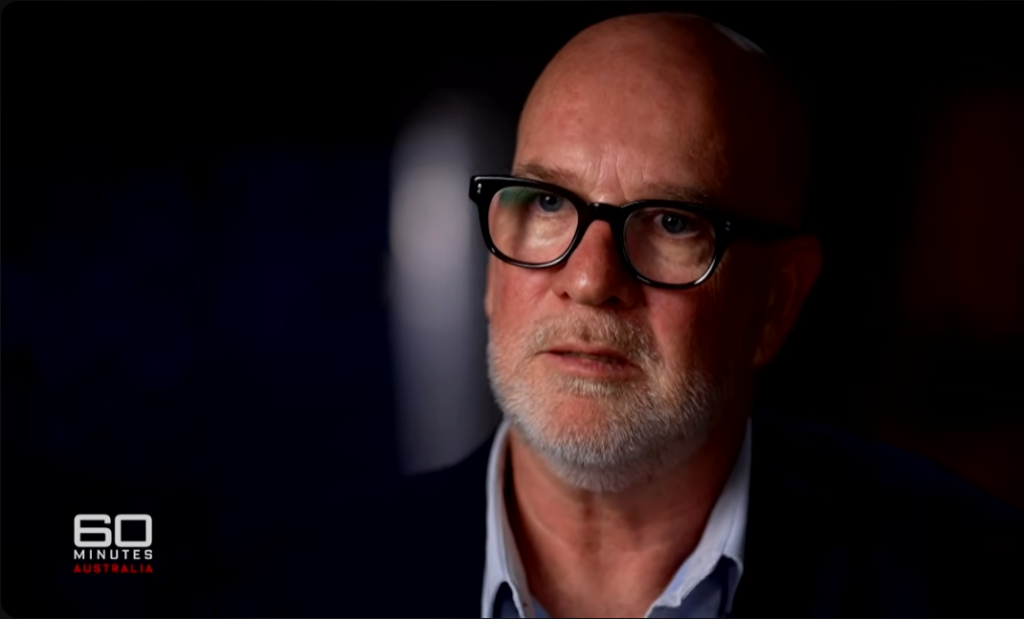
Since the 60 Minutes episode aired that I featured in, I’ve found myself sitting with a single, uncomfortable question: how did we get to this point — a point where the very technologies that could be lifting us up are instead eroding the well-being of our kids, our teens, and increasingly, all of us.
The episode focused on the negative impact of devices on young people and the changes we’re seeing in their brains. And in the days since, I’ve been reading, listening, and reflecting even more deeply.
One piece that struck me was Mia Bannister’s article, “In Construction, We Design for Safety… So Why Are Tech Companies Designing a Digital World That Harms Our Kids?” Her framing sharpened something I’ve been circling for years: harm is not an accident — it’s a design choice.
What we’re seeing in young brains is not a mystery. It’s the predictable outcome of tools engineered with one overriding goal: maximise engagement at all costs. Not maximise learning. Not maximise connection. Not maximise human potential. Maximise profit.
And when a small number of people control the design of tools used by billions, the consequences scale with breathtaking speed. We’re now living inside an unplanned global experiment, and the early results — attention problems, sleep disruption, emotional volatility, rising anxiety — are telling us something we can no longer ignore.
This is the part that keeps circling in my mind: technology itself is not the villain. It never has been. These devices represent extraordinary human ingenuity. They could be making our lives richer, calmer, more connected, more creative. They could be supporting children’s development rather than undermining it.
But tools reflect the intentions of their makers. And when the intention is to capture attention rather than support wellbeing, the outcome is exactly what we’re seeing now — a slow, steady reshaping of behaviour, habits, and neural pathways. Oh, and Society!
So how do we change this?
I wish I had a long list of solutions. I don’t. But I do know where change always begins: education.
Not fear. Not shame. Not guilt. Education.
When parents understand what’s happening in the brain, they make different choices. When teachers understand the cognitive load children are carrying, they adapt their classrooms. When young people understand how these systems work, they begin to reclaim their agency. And when societies understand the scale of the problem, pressure builds for regulation, redesign, and responsibility.
Education is the spark that shifts culture. It’s slow, but it’s powerful. And right now, it’s the most reliable lever we have.
My hope and the reason I keep doing this work is that by naming what’s happening, by explaining the science clearly, and by supporting families and schools with practical tools, we can help tilt the trajectory back toward something healthier, more humane, and more hopeful.
We created this technology. We can reshape it. But only if we understand it first.